Adjunctive hormones — DHEA and melatonin
DHEA dose bands by sex/weight/age (SR-only, no 7-keto), the absolute pregnancy contraindication, melatonin's oncostatic + immune-modulating profile, and the absolute contraindication on immunosuppressants.
Learning objectives
After completing this module, you will be able to:
- Apply the DHEA dose bands by sex, weight, age, and autoimmune indication (men <200 lb 50 mg, men >200 lb 75–100 mg, women >40 10 mg, women >50 15 mg, women >60 25 mg, SLE/RA 25–50 mg SR QAM).
- Interpret the Nimbus DHEA-S targets (men 500–600 mcg/dL; women 200–250 mcg/dL) and explain why the lab to order is DHEA-S, not DHEA.
- Identify the absolute DHEA contraindications (pregnancy and breastfeeding — teratogenic) and the age-band exclusion in women under 40 without a connective-tissue indication.
- Construct a melatonin protocol (women 1–3 mg SR, men 3 mg SR, 1 hr before sleep; titrate to 30 mg, rarely 100 mg) with the oncostatic and immune-modulating rationale.
- Apply the absolute melatonin contraindication on any patient receiving immunosuppressant therapy and counsel on the underlying immune-upregulation mechanism.
- Differentiate the SR-only-required formulations (DHEA, melatonin) from the SR-excluded formulations (thyroid, progesterone) so prescribers and pharmacists do not generalize the rule.
Disclosures & accreditation statement
Activity type
Internal Provider Education
Faculty & planners
- Dr. Jobby John, PharmD, FACA (author) — Founder & CEO, Nimbus Healthcare (employer); Inventor of IntelliHealth Clinical Decision Intelligence Platform.
- Dr. Jobby John, PharmD, FACA (reviewer) — Founder & CEO, Nimbus Healthcare (employer); primary clinical reviewer.
- Dr. Richard Harris, MD, PharmD, MBA (reviewer) — Secondary clinical reviewer. Relevant financial relationships: [to be disclosed].
Off-label / unapproved use
This activity discusses off-label or unapproved use of: Compounded DHEA SR capsules — off-label by default (no FDA-approved oral DHEA product for adult hormone optimization)., Vaginal DHEA — Intrarosa 6.5 mg PV QHS is FDA-approved specifically for menopausal dyspareunia; compounded vaginal DHEA variants are off-label., Targeting a serum DHEA-S level (men 500–600 mcg/dL; women 200–250 mcg/dL) — off-label; no FDA-approved indication for biochemical DHEA-S optimization., Systemic DHEA in women <40 with SLE / RA / connective-tissue disease — off-label., Compounded sustained-release melatonin at any dose — off-label (no FDA-approved melatonin product for sleep)., Melatonin doses above the 3 mg supplement-typical range, including 10–30 mg SR for refractory insomnia and rarely 100 mg — off-label., Melatonin as an oncology adjuvant (breast, ovarian, prostate, oral, gastric, colorectal) — off-label and coordinated with the patient's oncology team., Melatonin for jet lag, REM-sleep normalization, nocturia in Parkinson's disease, and nocturnal blood pressure reduction — off-label..
Commercial support
None.
All relevant financial relationships have been identified, reviewed, and mitigated per ACCME Standards for Integrity and Independence.
The premise
DHEA and melatonin are framed as "adjunctive" hormones in most teaching materials — the two you reach for after the headliners (estrogen, progesterone, testosterone, thyroid) are already optimized. The framing is convenient but it understates both molecules. DHEA is an upstream precursor: the adrenal gland synthesizes it, and downstream tissues use it to produce estrogens and androgens locally. Levels fall predictably with age, fall further under chronic inflammatory load (SLE, RA), and fall further still under cortisol-dominant chronic stress. Melatonin is even less well-served by the "sleep hormone" label most patients arrive with — its receptors live in brain, retina, liver, gut, kidney, vascular endothelium, adipocytes, immune cells, and reproductive organs, and the trial literature reads more like an oncology / cardiovascular / circadian adjuvant than a sleep aid.
Two things make this module its own beast. First, the formulation rule inverts. The SR-only-or-never rule that applied to thyroid and progesterone (where SR is contraindicated) reverses for DHEA and melatonin (where SR is required). Second, each molecule carries an absolute contraindication that gates initiation: pregnancy / breastfeeding for DHEA (teratogenic), and active immunosuppressant therapy for melatonin (immune-upregulating). Miss either and the rest of the protocol does not matter.
Pre-test
Check yourself
A prescriber wants to monitor a patient on DHEA replacement therapy. The right lab to order is:
DHEA physiology — the upstream precursor
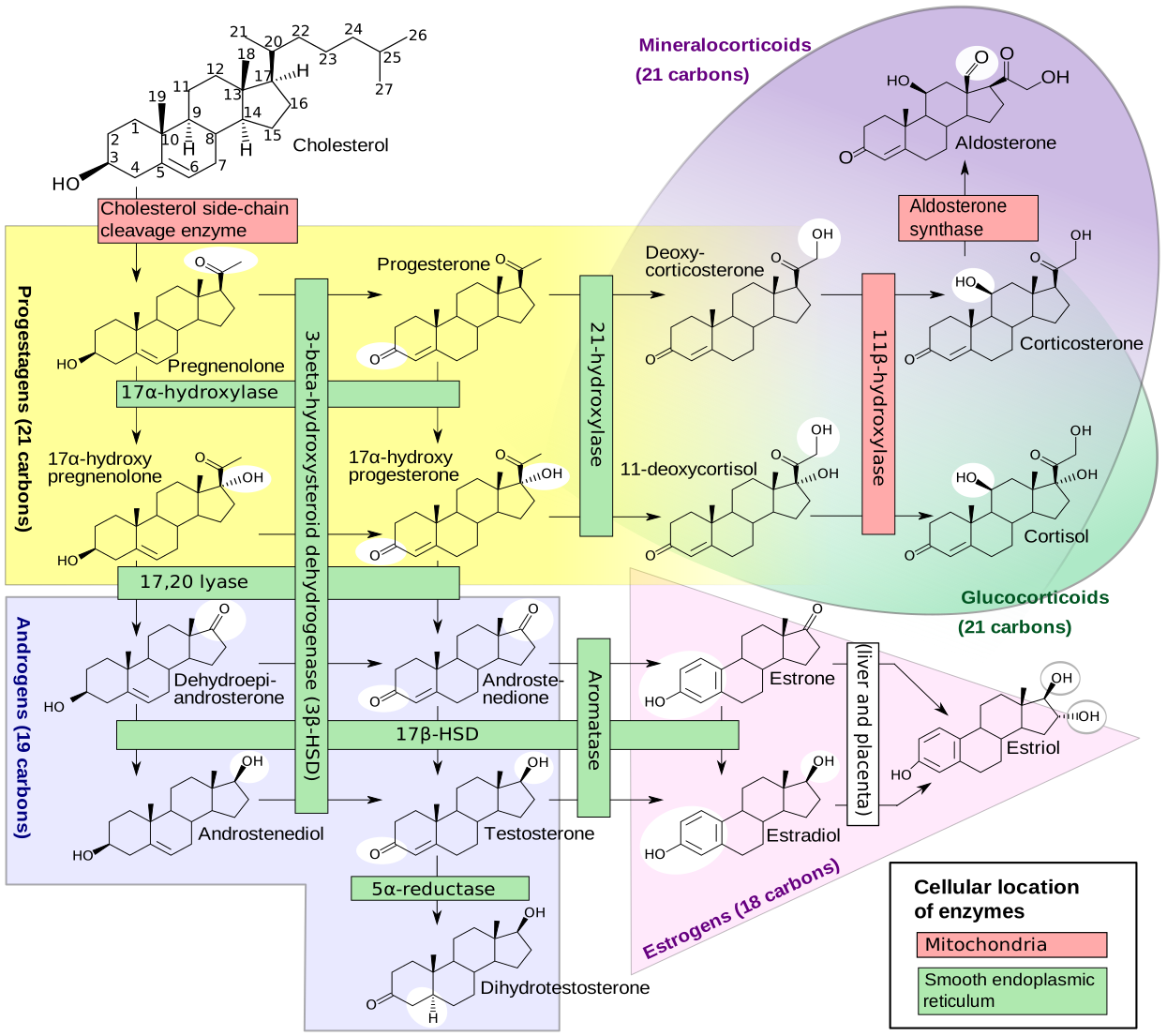
Image
DHEA is the bridge from cholesterol to the active sex steroids. Adrenal DHEA peaks in the third decade and declines ~2% per year; supplementation aims to restore physiologic precursor levels rather than to directly replace downstream hormones.
Credit·David Richfield (Slashme), Mikael Häggström, Hoffmeier, Settersr, CC-0 (public domain dedication) — Wikimedia Commons
DHEA is produced in the zona reticularis of the adrenal cortex and converted in peripheral tissue to androstenedione and onward to testosterone and estrogens via the steroidogenic pathway. The sulfated form, DHEA-S, dominates the circulating pool — it is the stable reservoir most laboratories report. DHEA-S declines roughly linearly with age starting in the third decade and is suppressed further by chronic cortisol elevation (the "adrenal shunt" framing taught in functional endocrinology), by chronic inflammatory disease (SLE, RA), and by glucocorticoid therapy.
The pharmacology argument for replacement is essentially substrate logic: tissues that need local estrogen or androgen synthesis (skin, bone, vagina, brain) cannot make it if the upstream precursor pool has collapsed. That logic carries the trial evidence furthest in women with SLE / RA, where DHEA replacement has reproducible signal on disease activity and symptom control. [Petri-SLE-DHEA] The argument generalizes less cleanly outside autoimmune disease, which is why the Nimbus protocol leans on age-band thresholds rather than a single universal recommendation.
DHEA dose bands — by sex, weight, age, and autoimmune indication
The Nimbus dose bands replace the conventional "10–50 mg QAM" sliding-scale dosing with discrete bands keyed to physiology. SR compounded capsules are the only formulation Nimbus prescribes.
| Population | Starting dose | Notes |
|---|---|---|
Men, body weight <200 lb | 50 mg SR PO QAM | Standard adult male starting dose |
Men, body weight >200 lb | 75–100 mg SR PO QAM | Larger lean mass requires higher precursor pool |
| Women, age 40–49 | 10 mg SR PO QAM | Conservative — androgenic AEs are dose-limiting in women |
| Women, age 50–59 | 15 mg SR PO QAM | |
| Women, age 60+ | 25 mg SR PO QAM | |
| SLE / RA / connective-tissue (any sex) | 25–50 mg SR PO QAM | Autoimmune indication justifies higher dose; literature signal strongest |
Androgenic adverse events (acne, hirsutism, scalp-hair thinning) are the dose-limiting toxicity in women. The clinical response is to drop dose, switch to every-other-day dosing, or — if a confirmed androgenic AE persists in a female patient — add spironolactone (maximum 100 mg BID). Spironolactone is ineffective for the analogous AE pattern in male patients and should not be added there.
DHEA-S target — men
500–600mcg/dL
Test DHEA-S, not DHEA. Recheck at 8–12 weeks.
DHEA-S target — women
200–250mcg/dL
Higher levels drive acne and hirsutism.
Men <200 lb
50 mgSR QAM
Standard adult male starting dose.
Men >200 lb
75–100 mgSR QAM
Adjust to body mass; recheck at 8–12 weeks.
Women 40 / 50 / 60+
10 / 15 / 25 mgSR QAM
Conservative start; titrate cautiously.
SLE / RA / CTD
25–50 mgSR QAM
Strongest trial signal; tolerates higher dose.
Formulation rule
SR only
No 7-keto. No cream. Vaginal DHEA only as labeled Intrarosa or compounded variant.
Absolute CI
Pregnancy
Pregnancy / breastfeeding — teratogenic. Hard block.
DHEA-S targets — and why the lab is DHEA-S, not DHEA
Optimal serum targets are 500–600 mcg/dL in men and 200–250 mcg/dL in women. Both are off-label biochemical targets — the FDA has not approved DHEA replacement to a serum endpoint — but they are the Nimbus protocol because they correlate with the symptom-relief endpoints (energy, mood, libido, exercise tolerance) that drive the clinical decision. Recheck at 8–12 weeks after initiation or any dose change.
The lab to order is DHEA-S, not DHEA. DHEA itself fluctuates widely with ACTH pulses and circadian rhythm; DHEA-S (the sulfate form) has a half-life of roughly 7–10 hours and gives a stable, vendor-reproducible reading from a single morning draw.
SR only — no 7-keto, no cream
Two formulation traps are common in retail and functional-medicine settings.
7-keto DHEA is a metabolite, not a precursor. It cannot re-enter the steroidogenic pathway as the parent molecule does. Substituting 7-keto for DHEA gives none of the downstream conversion to estrogens or androgens — patients pay for it and get nothing of the intended effect. Nimbus does not use 7-keto for any DHEA indication.
DHEA cream has poor cutaneous absorption, the suspension grits visibly on the skin, and serum levels are unreliable. The Nimbus formulation is SR oral capsule. Vaginal DHEA is the exception, where local action — not systemic — is the goal.
Vaginal DHEA — Intrarosa and compounded variants
Intrarosa 6.5 mg PV QHS is FDA-approved for moderate-to-severe dyspareunia in postmenopausal women. The mechanism is local conversion of DHEA to estrogen and testosterone in vaginal epithelium and submucosa — systemic absorption is minimal, which is why the labeled indication carries a different risk profile than systemic estrogen. Compounded vaginal DHEA formulations exist; their use is off-label but commonly indicated when a patient cannot tolerate or access Intrarosa.
Pre-40 women — avoid unless SLE / RA / CTD
Systemic DHEA is not a routine optimization tool in women under 40. Below that age, endogenous DHEA-S is typically intact, the symptomatic benefit window is narrower, and the androgenic AE rate (acne, hirsutism) is not outweighed by the gain. The exception is connective-tissue disease — SLE, RA, and adjacent autoimmune indications — where DHEA-S is often suppressed by chronic inflammation and glucocorticoid therapy and the trial signal supports a 25–50 mg SR dose.[Petri-SLE-DHEA]
For low-DHEA-S workups in women under 40 without a CTD indication, work the upstream causes first: thyroid dysfunction, iron deficiency, sleep restriction, mood, oral contraceptive effects on adrenal output. DHEA replacement is a downstream tool.
Absolute contraindications — pregnancy and breastfeeding
DHEA is teratogenic. Pregnancy and breastfeeding are absolute contraindications, not relative. The block is hard in both directions: do not initiate in a patient who is pregnant, planning pregnancy, or breastfeeding, and discontinue immediately if pregnancy is confirmed on therapy. This is the highest-yield contraindication to memorize because the OTC supplement framing of DHEA leads patients to assume it is benign.
The clinical-decision-support checklist for any DHEA initiation:
- Pregnancy test in any woman of reproductive potential.
- Breastfeeding status confirmed.
- Active or historical hormone-sensitive cancer (breast, prostate, endometrial) triaged with oncology before initiation.
- Age and CTD status confirmed to pick the dose band.
- DHEA-S baseline drawn, not serum DHEA.
Mid-module checkpoint — the SR rule reversal
Check yourself
Across the Nimbus protocols, the sustained-release (SR) formulation rule is module-specific. Which of the following is correct?
Require SR
DHEA
Short half-life; SR avoids peak-trough androgen spikes
Melatonin
Mimics nightly endogenous release curve
Exclude SR
Thyroid (LT4, LT3, DTE)
SR delays absorption; narrow therapeutic window broken
Progesterone (oral micronized)
SR muddies cyclic / daily kinetics; use immediate-release
Schematic
The SR-rule reversal is a near-universal source of prescribing error. DHEA and melatonin REQUIRE SR (steady levels overnight); thyroid hormone and oral progesterone EXCLUDE SR (their absorption + first-pass kinetics are the therapeutic mechanism). Verify the formulation against this matrix at every dispense.
Source·Nimbus clinical policy — BHRT syllabus formulation rules; module 06 DHEA / melatonin.
Melatonin physiology — pineal, dim-light, and age-related decline
Figure
Endogenous melatonin (line) follows a tight circadian pattern peaking at 02:00–04:00. Sustained-release supplementation (shaded band) taken 1 hour before sleep mimics the natural curve; immediate-release peaks early and clears before the endogenous trough, which is why the Nimbus protocol uses SR exclusively for melatonin.
Source·Standard chronobiology textbook traces (recreated); SR/IR PK references in docs/anti-gap/06-dhea-melatonin.md. Nimbus clinical policy — SR-only melatonin.
Melatonin is synthesized primarily in the pineal gland from serotonin in a dim-light-gated rhythm (the suprachiasmatic nucleus is the master clock; light exposure suppresses synthesis). Peripheral synthesis also occurs in the GI tract, skin, bone marrow, and lymphocytes — melatonin is therefore not solely a circadian-rhythm molecule. Receptor sites span brain, retina, liver, intestine, kidney, gallbladder, the cardiovascular endothelium, immune cells, adipocytes, and reproductive organs, which sets up the pleiotropic clinical profile.
Endogenous melatonin secretion declines with age, with screen / artificial-light exposure, and with shift work. Patients on the Nimbus protocol who present with insomnia, maladapted shift schedules, jet lag, REM-disturbed sleep, or nocturia in Parkinson's disease are candidates for replacement — within the boundary set by the immunosuppressant contraindication below.
Melatonin dosing — start low, titrate to clinical effect
The standard Nimbus starting protocol:
- Women: 1–3 mg SR PO 1 hour before sleep.
- Men: 3 mg SR PO 1 hour before sleep.
- Sensitive patients: 0.5–1 mg SR.
- Women already on oral micronized progesterone: start at 1 mg SR (progesterone itself is sedating; stacking sedatives invites grogginess).
- Refractory insomnia: titrate up to 30 mg SR; rarely 100 mg SR for cancer-adjuvant or refractory indications.
Formulation is sustained-release. The clinical reason is the same as the physiologic reason — endogenous melatonin rises gradually after dim-light onset and remains elevated for several hours; IR melatonin produces a peak-and-crash profile that mismatches the natural curve and produces more morning grogginess.
Melatonin clinical effects — beyond sleep
Jet lag. The Cochrane systematic review of melatonin for jet lag found melatonin taken close to the target-destination bedtime (typically 10 PM to midnight) reduced jet lag for flights crossing five or more time zones, with a number-needed-to-treat of 2.[Cochrane-Jetlag-2002] Daily doses of 0.5–5 mg were similarly effective; doses above 5 mg conferred no further benefit. Eastward travel responds more strongly than westward. Timing matters more than dose: melatonin taken too early in the day causes daytime sleepiness and delays adaptation.
REM sleep normalization. Two RCTs by Kunz and colleagues showed melatonin can normalize REM-sleep percentage, continuity, and architecture, with measurable daytime well-being effects.[Kunz-REM-2004] REM is qualitatively disturbed and quantitatively reduced by aging, brain disorders, and many psychotropic drugs — relevant for the postmenopausal and elderly patients who most commonly arrive at Nimbus.
Nocturia in Parkinson's disease. An open-label pilot of 2 mg SR melatonin in PD patients with nocturia showed significant improvement in nocturnal voiding frequency and volume.[Batla-2021-Nocturia] The mechanism is reframed: nocturia in PD is increasingly viewed as circadian dysregulation rather than purely urological. TODO(citation): confirm exact Batla 2021 reference and trial register identifier before publication.
Oncostatic activity. Reiter and Lissoni groups have published extensively on melatonin's oncostatic mechanisms — direct ROS / RNS detoxification, antioxidant-enzyme stimulation, MT1 / MT2 receptor modulation of apoptosis, angiogenesis inhibition, and epigenetic modulation.[Reiter-Oncostatic][Lissoni-Oncology] Documented oncostatic signal exists across breast, ovarian, prostate, oral, gastric, and colorectal cancers — including as an adjuvant that reinforces chemotherapy and radiation effect while reducing chemotoxicity. Melatonin is framed as a promising adjunct, not a substitute, for prevention or treatment, and oncology co-management is required in active treatment.
Nocturnal blood pressure. Daily nighttime melatonin in men with essential hypertension reduced blood pressure in a controlled trial by Scheer and colleagues — a finding consistent with the central / peripheral circadian regulation framework.[Scheer-BP-2004]
Melatonin — the absolute contraindication on immunosuppressant therapy
Melatonin upregulates innate and cellular immunity: it stimulates progenitor cells, granulocytes, macrophages, NK cells, and increases IL-2, IL-6, IL-12, and T-helper / CD4+ counts.[Srinivasan-Immune-2005] For a healthy patient that is the upside. For a patient on immunosuppressant therapy it is the contraindication: melatonin directly antagonizes the therapeutic goal of the suppressant.
Translate that to the patient list. Any of the following is an absolute block:
- Transplant patients on tacrolimus, cyclosporine, mycophenolate mofetil (MMF), sirolimus, or comparable agents.
- Autoimmune-disease patients on methotrexate, biologics (TNF-alpha inhibitors, IL-6 inhibitors, JAK inhibitors), or high-dose corticosteroids.
- Oncology patients on immunotherapy where immune suppression is part of the therapeutic plan — coordinate with oncology, never assume.
Nimbus-vs-mainstream — the framing summary
Adverse-event playbook
Two short ladders worth memorizing.
DHEA — androgenic AEs in women (acne, hirsutism, hairline thinning): reduce dose; switch to every-other-day; if confirmed AE persists, add spironolactone up to 100 mg BID. In men on combined T + DHEA, facial / hairline acne is frequently DHEA-driven rather than testosterone-driven — reduce DHEA before assuming T is the cause.
Melatonin — common AEs:- Morning grogginess: shift dose to 2 hours before bed or with dinner; consider IR; reduce dose.
- Vivid dreams or nightmares: drop to a low starting dose and titrate up by 0.5 mg increments.
- Paradoxical insomnia: restart at a very low dose with slow titration.
Two short case studies
Case — a 45-year-old woman with chronic pain and low DHEA-S (first-name only: "Kate"). Baseline DHEA-S below the female target range. Started on DHEA SR. At follow-up, pain improved by an "8-out-of-10" patient-reported margin and SR dose was increased to 25 mg BID to optimize further. Other hormone deficiencies were sequenced afterward.
Case — a 58-year-old man with depression, low motivation, fatigue, and sleep disturbance ("Paul"). Baseline labs (Quest): TSH 1.32, FT4 0.99, FT3 4.4, DHEA-S 201 mcg/dL (low for the male target), Total cholesterol 198, HDL 30, TG 401, Total T 305 ng/dL, Free T 42 pg/mL, PSA 1.5. Plan: clear primary care first, start DHEA SR 50 mg daily, recheck at 8–12 weeks. At follow-up DHEA-S rose to 501 mcg/dL — in the male target range — and the patient's depression had improved per partner report. Testosterone replacement was discussed and deferred pending readiness.
Role-specific guidance
Preview · showing both tracks
For prescribers
- Pick the dose band before writing the order. Get sex, weight (for the male split at 200 lb), age (for the female band 40 / 50 / 60+), and CTD status.
- Lab order: DHEA-S, not DHEA. Baseline before initiation. Recheck at 8–12 weeks.
- Screen for the absolute DHEA contraindications (pregnancy / breastfeeding) and the relative blocks (active hormone-sensitive cancer pending oncology, severe androgenic AEs in women).
- Counsel female patients of reproductive potential on contraception and the teratogenicity of DHEA. Document the conversation.
- For melatonin, screen the patient's full medication list for immunosuppressants — transplant regimens, biologics, methotrexate, MMF, sirolimus, cyclosporine, tacrolimus, high-dose steroids. Any positive screen = hard block.
- In active cancer patients, coordinate melatonin initiation with oncology — the protocol favors continuation/initiation as an adjunct, but the oncology team drives timing and dose.
For pharmacists
- Dispense DHEA only as SR compounded capsules. Refuse to fill 7-keto DHEA against a DHEA SR order — they are not interchangeable; 7-keto is a downstream metabolite without precursor activity. Confirm before substitution.
- Cream formulations of DHEA are not Nimbus protocol. If a prescriber writes for DHEA cream, escalate — gritty texture, poor absorption, and unreliable serum levels.
- Vaginal DHEA dispensed as Intrarosa 6.5 mg PV QHS (labeled) or as a clearly-labeled compounded variant for the off-label indication.
- Melatonin: dispense SR only, distinguishing the SR product from any IR melatonin the patient may have stockpiled OTC. Counsel: SR mirrors endogenous physiology; IR is reserved for AE management (morning grogginess) under prescriber direction.
- Drug-interaction screen on every melatonin fill: tacrolimus, cyclosporine, MMF, sirolimus, methotrexate, biologics, high-dose corticosteroids. Any active immunosuppressant — hold and call the prescriber. Melatonin is CYP1A2-metabolized and shares pathways with fluvoxamine, ciprofloxacin, and several SSRIs; monitor and counsel.
- For any DHEA fill in a fertile woman, reinforce the teratogenicity counseling and confirm the prescriber's pregnancy-test documentation.
Post-test
Check yourself
A 45-year-old woman with rheumatoid arthritis on methotrexate asks her Nimbus prescriber about adding 3 mg SR melatonin for insomnia. The best response is: